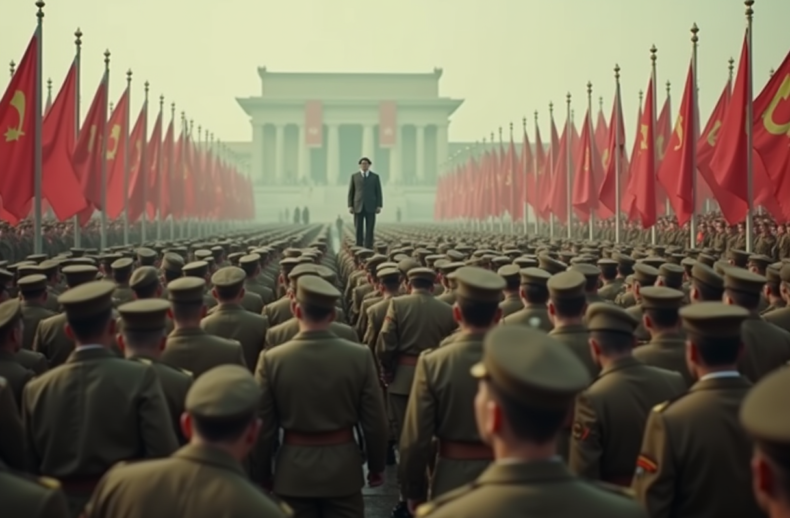
Nations are not held together by shared beliefs or unanimous agreement. They remain stable because citizens develop a shared sense of reality—a common set of expectations about what is real, what consequences will follow actions, and which futures are plausible. This sense of reality operates below ideology and opinion and is reinforced through institutions, rituals, and social consequences. The public return of North Korean soldiers from foreign deployment illustrates how societies actively repair and stabilize these shared expectations, absorbing potentially disruptive experiences into a coherent national order rather than allowing them to fracture it.
Despite unprecedented global connectivity, modern societies are experiencing rising polarization, nationalism, and everyday cultural conflict. This essay argues that these tensions are not driven by ignorance, moral failure, or technological fear, but by a structural imbalance between the speed of change and the capacity of cultures to maintain shared expectations. The internet and artificial intelligence amplify dominant global reference frames without providing mechanisms for local integration, creating cultural compression and loss of predictability in daily life. In response, “Me First” politics and renewed nationalism emerge as rational stabilization strategies rather than ideological regressions. Understanding this dynamic reframes contemporary conflict as a systems-design problem—one that requires respecting cultural boundaries and integration limits if global cooperation is to remain viable.
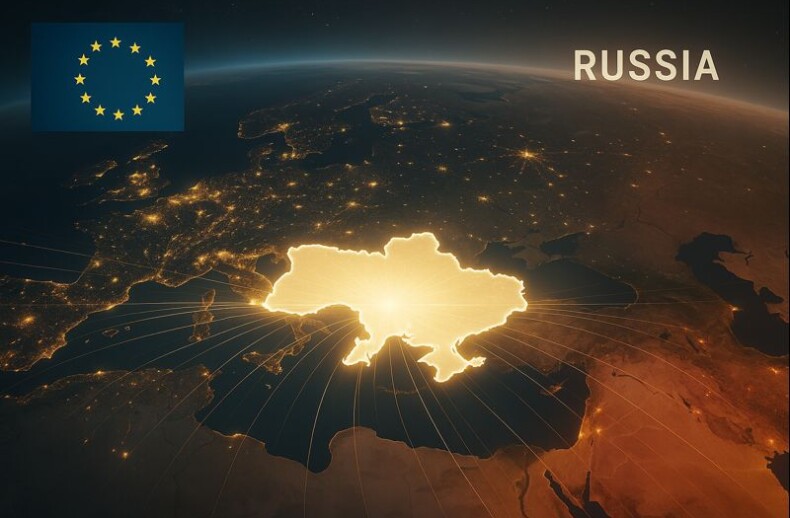
The Kyiv Bridge Peace Plan proposes a new geopolitical architecture for ending the Ukraine war by reframing Ukraine not as a contested frontier, but as a neutral economic bridge linking the European Union and the Eurasian Economic Union. The plan begins with a rapid, verifiable ceasefire that freezes the frontline within hours and ties Russia’s incentives to a structured, automatic sanctions-removal mechanism. It then builds a layered economic system in which Ukraine integrates deeply with the EU while simultaneously operating as an interface economy for east–west transit, resource flows, and industrial supply chains.
A central component is a realistic settlement for the Donbas. Rather than expecting its reintegration, the plan accepts current military realities while preventing the region from becoming a sealed-off military block. Donbas becomes a cross-border interface zone: Russian-controlled in practice, but economically and humanitarianly open to Ukraine and embedded in the larger Eurasian corridor.
By combining constitutional neutrality, EU integration, structured access to Eurasian markets, and a pragmatic Donbas arrangement, the Kyiv Bridge Plan replaces territorial absolutism with geoeconomic interdependence. It offers a workable path toward stability by making peace economically more valuable than conflict for all parties involved.
1. The Virginia Giuffre Case as a Mirror of the Demand for Recognition (DfR) Throughout history, sexual domination has expressed the deepest structure of human inequality: the asymmetric control of recognition. From emperors to executives, men have sought affirmation of their importance by bending others—especially women—into mirrors of submission. The Virginia Giuffre case, culminating in her tragic suicide in 2025,…
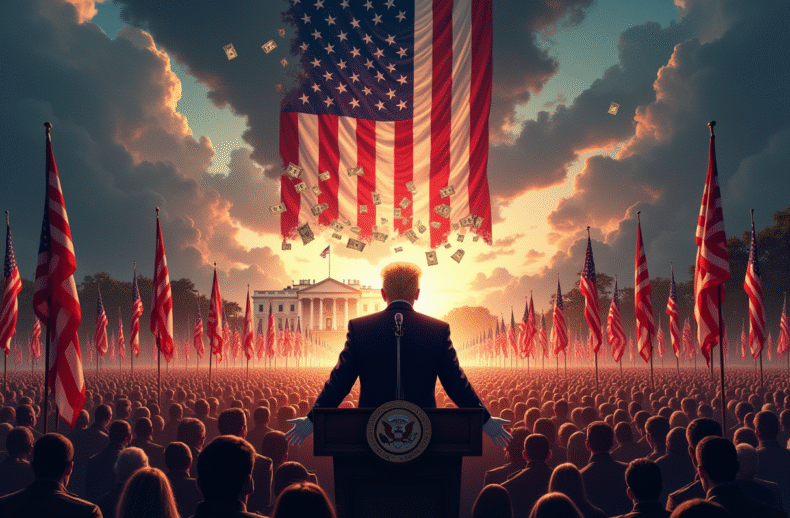
Donald Trump’s second term reveals not only his willingness to stress the economy and social fabric but also a deeper long-hand strategy to remain in power beyond constitutional limits. Through loyalty tests of the military and National Guard, deliberate escalation of fiscal crises, and the mobilization of the MAGA base, Trump rehearses conditions in which systemic failure becomes his opportunity. From an Eidoism perspective, this is an expression of the Demand for Recognition (DfR): the neural drive that transforms collapse into a stage for personal affirmation. Military deployments test recognition within the chain of command, economic breakdown magnifies the craving for continuity, and MAGA rallies feed back mass recognition to the leader. In such loops, institutions bend not because the law is ignored, but because fear and recognition hunger override constitutional resilience. Unless societies develop recognition awareness, they will remain vulnerable to leaders who weaponize crisis to secure their place in power.
War between Europe and Russia should be irrational. Rational models show both sides would suffer catastrophic losses. Yet history reminds us that wars are not born from logic, but from the hidden Demand for Recognition (DfR) — the deep drive to preserve dignity, avoid humiliation, and claim prestige. Europe’s decline has created a recognition deficit, Russia thrives on recognition through defiance, and NATO is bound to protect credibility. The recent Polish drone incident illustrates how even a trivial event can escalate into a symbolic confrontation, where restraint feels like dishonor and escalation appears as strength. Rational payoff tables predict peace, but once recognition is included, confrontation becomes tempting, even inevitable. To avoid war, recognition must be openly managed: dignity must be preserved on all sides, or small sparks may ignite a larger conflagration.
Germany faces a turning point: high energy costs, industrial decline, and social tensions are eroding trust in the mainstream parties. The AfD has surged to around a third of the vote, echoing Weimar-era patterns of economic frustration and political deadlock. Yet unlike Weimar, today’s Basic Law and EU integration provide stability—but if the “firewall” against the AfD blocks it from power while governing coalitions fail to deliver, frustration will deepen. The Demand for Recognition (DfR) explains this spiral: voters and parties alike want acknowledgment of their role and dignity. A National Renewal Compact, giving each major party visible ownership of key reforms, could stabilize industry, jobs, and democracy—avoiding a slow slide into modern Weimarization.
The United Nations was built to replace “might makes right” with law and diplomacy, yet the Right of the Strong continues to dominate global politics. From U.S. hegemony to Russia’s war in Ukraine, from Trump’s “Gaza Riviera” plan to NATO maneuvers and economic sanctions, the same pattern emerges: power overrides principle when recognition is denied.
Eidoism explains why. At the heart of these conflicts lies the Demand for Recognition (DfR)—the deep human and national drive to be seen, respected, and dignified. International law cannot erase this drive; when recognition is withheld, nations turn to force.
The solution is not a new world policeman, but a new architecture of recognition: balancing dignity between strong and weak, creating prestige currencies beyond war, ritualizing rivalry, and elevating restraint as the ultimate form of strength. Only then can the world move from bullying and humiliation toward lasting peace.
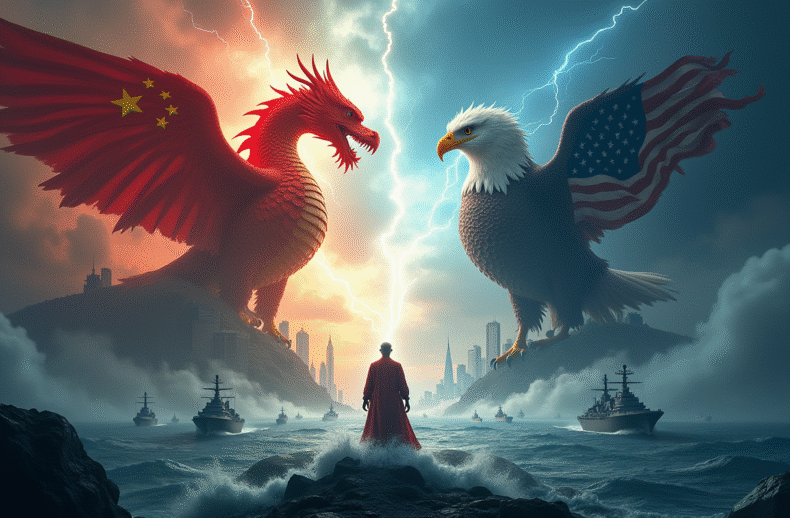
China’s ambition to create a new world order is less about ideology than about recognition. From the dynasties of the past to the People’s Republic today, China has sought to transform power into dignity — never again to suffer humiliation. Its military modernization, global trade dominance, and Belt and Road infrastructure are not mere strategies; they are materialized forms of face. Yet this reflex meets America’s own Demand for Recognition, creating a trap where each move for respect is read as an insult by the other. History shows that China fights limited wars for symbolic status, not open conquest. But external triggers — a Taiwanese declaration of independence or a sudden U.S. technological leap — could tip both powers into direct confrontation. The struggle is not only about territory but about dignity itself, and unless recognition is consciously redefined, the world risks drifting into conflict by reflex.
Modern society is built on an invisible law: the Demand for Recognition. Elites—political leaders, financial warriors, corporate deal makers—seek recognition through dominance. The masses, though equally bound by the same drive, find it in obedience and belonging. Together they form an unequal exchange where recognition outweighs reason, justice, and even survival. Eidoism reveals this hidden architecture, showing why humanity repeatedly sacrifices its future for prestige, loyalty, and power. Awareness of this mechanism is the first step toward freedom.
The Gaza conflict is not unsolved because leaders lack clever plans, but because human brains are wired to turn every plan into a battlefield for dignity. Israel and the U.S. want closure through decisive control, Hamas thrives on endless struggle, international do-gooders seek moral recognition, and the Palestinian people remain victims caught between these forces. The hidden mechanism is the Demand for Recognition (DfR) — an unconscious neural bias that bends every prediction of “what to do next” toward preserving pride and avoiding humiliation. As long as DfR drives decision-making, Gaza will remain trapped in a cycle of violence, where strength creates erasure, resistance creates survival, and peace is always postponed.
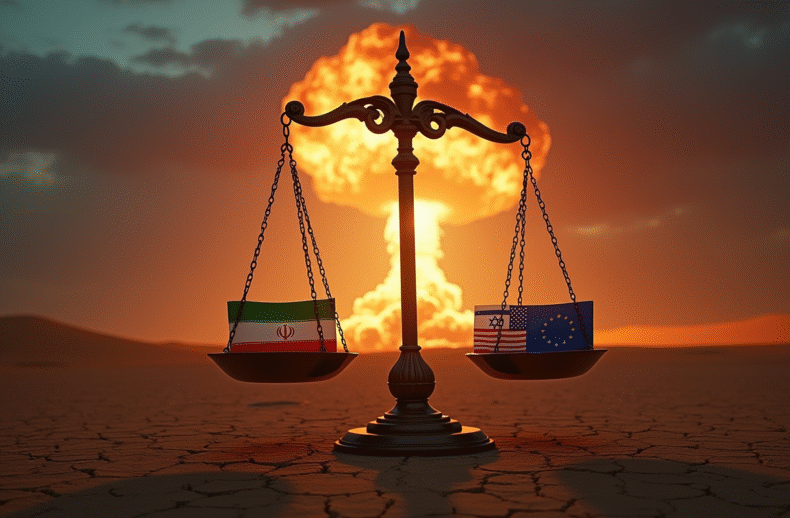
The Iranian nuclear conflict cannot be understood solely through the lens of technology and security. Enrichment levels and missile ranges matter, but they are not the real drivers of escalation. At its core, Iran’s pursuit of the bomb is about the Demand for Recognition (DfR) — the need to be acknowledged as sovereign, equal, and immune to humiliation. Each sanction, each Israeli or U.S. strike, has deepened Iran’s resolve rather than weakened it. The atomic bomb represents not just deterrence, but dignity: a symbolic victory in a struggle for respect on the world stage. If Iran crosses the nuclear threshold, the West must abandon denial and coercion. Only through recognition-based diplomacy can confrontation be transformed into stability.