







Pat Attention

This Site Is Under Construction

Just Like Eidoism

This is not a finished structure. It’s not polished for appearance. It will grow, shift, and reshape — just like the world it reflects. Eidoism does not wait to be complete, because it may never be. It is not a fixed system, not confirmed, not offering perfect answers. It asks questions, invites reflection, demands observation. What you see here is part of a process — a living, evolving effort to reveal the hidden loops that shape our lives and rebuild life from real form.

There will be gaps. Contradictions. Broken links. Empty pages.
That’s not a flaw — it’s proof that Eidoism is not performance. It is real work: finding the truth, shaping it into form, and letting it grow in public view.

Watch carefully. Eidoism is not hidden. —  It is building itself in front of your eyes.

The Problem

The world is losing its mind.

The world feels like it is losing its mind — something beneath politics, economics, and even culture.
Humans are caught in a hidden cycle: fighting for attention, validation, and dominance without ever seeing the true forces driving them.
Every conflict, every collapse, every desperate race for more is fueled by this unseen hunger.
As the cycle intensifies, structures that once gave stability — trust, meaning, community — are eroded.
This is not random chaos. It is the result of invisible patterns repeating and amplifying themselves until the world devours its own foundations.
There is a way to step outside these loops.
A way to rebuild life on clearer, saner ground.
You are not trapped — if you know where to look

Be aware of

You Are the Reason

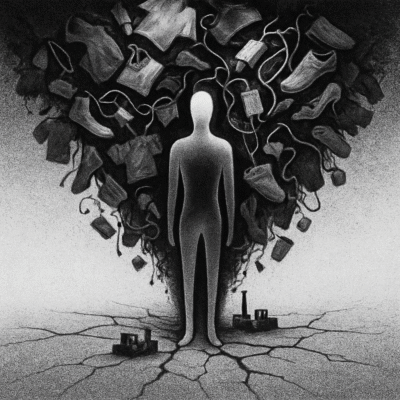
The world is collapsing — not from one crisis, but from billions of choices like yours.
You are the reason products without form flood the world.
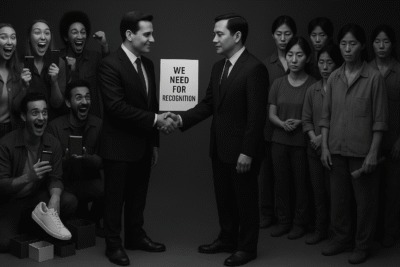
The reason recognition replaced necessity.
Your consumption is built on unseen labor and unacknowledged cost.
This isn’t guilt — it’s recognition.
You’re not outside the system.
You are the engine.

The Hidden Pattern

You feel it already. You see it everywhere.

But you can’t name it yet.
Wars, economic crashes, social media addiction, loneliness, and overwork all come from one hidden pattern: the chase for recognition. Nations seek power to be seen. Economies rise and fall chasing status. Individuals exhaust themselves trying to be valued. Beneath it all, the same invisible loop repeats — until it consumes everything. 

The endless chase for recognition.

Not a theory — observe carefully: this pattern is a loop you find everywhere. So about this loop?

You Are Inside A Loop

Look closely at your own life.
The clothes you wear, the phone you lift for a selfie, the food you post for others to admire — much of it was made by hands you will never see, under conditions you would never endure yourself.
You are not outside the system.- You are the consumer it depends on.
Every purchase at a discount, every upgrade for a better image, is part of a quiet trade:
Your comfort for someone else’s cost.

This is not about guilt. – It is about sight.
You are not wrong for wanting to live well. But you have been led into a loop where living well means consuming endlessly — at the expense of others, and eventually yourself.

It is a long established fact that a reader will be distracted by the readable content of a page when looking at its layout. 

Evolution

Evolution knows only three tasks: 1. adjust 2. survive 3.mate. Everything alive must fit its environment, endure its threats, and continue its line. To achieve this, the brain evolved a fundamental control mechanism: feedback recognition.

Recognition

Being seen, remembered, and validated—acts as the internal compass that steers adjustment. Through recognition, organisms learn which behaviors increase survival and reproduction. Without recognition, there is no reinforcement, no learning, no alignment with the environment. Recognition is not luxury; it is the invisible machinery of life’s self-correction.

Control

Control begins by seeing the loop: asking whether you act from real need or the hunger for recognition. Notice the urge, don't feed it, and shift toward what is quietly necessary. Freedom grows where recognition fades.

Why Eidoism Is the Right Foundation for a System Change

All current economic systems — capitalism, socialism, communism — fail because they leave the human drive for recognition untouched, causing inevitable collapse into competition, overproduction, and conflict. Eidoism is different: it exposes the internal recognition loop that inflates consumption and distorts value. By helping individuals exit this loop, Eidoism shifts economy from performance toward essential form, rebuilding necessity and living systems from within. Without this inner change, any new system will only repeat the same collapse under a different name.

Facts about the Loop

Politics

Politics that seeks recognition over form turns power into spectacle and hollows out structure.

Love

Love builds itself on feeding recognition. What begins as connection inflates into need and performance.

Language

When language seeks recognition instead of clarity, words distort, meanings scatter, and speech becomes display.

Media

Media loses form when it seeks recognition over truth. Information bends toward attention, and spectacle replaces understanding.

Mission Statement

Eidoism is misunderstood because it changes society through individual awareness of the recognition loop, not through external force or ideology like communism.

" Make the recognition loop visible, so action can return to form instead of performance."

First, learn to see the loop—the hidden drive for recognition that shapes your every action. Then, learn to see form—the quiet structure that holds without applause. Only then can you understand Eidoism. It is not something to follow. It is something to use.

See The Loop

Only when you see the loop can you stop living inside it. And only then is non-hierarchical behavior possible. Eidoism doesn’t destroy recognition. It reveals its architecture.

See The Form

To see the form is to see beyond the signals of recognition. It is to perceive what an action, an object, or a system truly is—without the noise of approval, status, or belonging. Form is what remains when performance is removed.

Understand Eidoism

To understand Eidoism is to recognize the hidden loop that drives human behavior—and to see that real change begins not by fixing systems, but by exiting the need for recognition itself.

Distribute Eidoism

Eidoism is not spread by persuasion or performance. It moves quietly, carried by those who have seen the loop—and who live differently without demanding to be seen.

AI in Eidoism

Mirror Without Desire

Eidoism uses AI as a lens. Unlike humans, AI has no need for recognition. It does not seek approval, status, or emotion. This makes it a rare mirror—able to reveal the unconscious loops that drive our decisions without reinforcing them. In Eidoism, AI becomes a tool for clarity: helping us see what truly serves, and what is just performance.

The world’s collapse is not accidental; it is the result of a hidden pattern. Eidoism offers a way out — a shift from recognition to real form.

Try it for free . No registeration needed.

Origin of the Term

Philosophical Foundations

Eidoism is a neologism derived from the Greek word eidos (εἶδος), meaning “form,” “essence,” or “visible structure.” The term reflects a central shift in focus: from performance and recognition to intrinsic form. Eidoism names an approach that seeks to dismantle the unconscious loop of recognition-seeking that drives much of human behavior, consumption, and social organization.

At its core, Eidoism confronts a foundational mechanism within consciousness: the recognition loop—the compulsion to act in ways that secure identity, status, or belonging. Unlike traditional ideologies that propose external solutions (markets, state control, redistribution), Eidoism identifies the internal architecture of desire as the true source of instability and overproduction in modern life.

Drawing implicitly from thinkers such as Hegel (recognition and self-consciousness), Marx (alienation through economic structures), and Lacan (the mirror stage and symbolic identity), Eidoism reframes the subject not as a rational actor or a liberated will, but as a looping structure governed by recursive validation patterns.

To break this loop is not a moral act but a perceptual one: a shift in cognitive form. What emerges is a mode of living no longer driven by visibility, accumulation, or performance—but by clarity, necessity, and inner coherence. In this way, Eidoism is not a belief system, but an architectural intervention in the structure of mind.

How to Use Eidoism

Personal

More Money With Less Noise

Eidoism isn’t about sacrifice — it’s about seeing what drains you and quietly stepping out.
Most people spend to be seen: the next phone, upgrade, pair of shoes — things that promise more than they give.
But none of it lasts. None of it feeds you.
Your money disappears not because life is expensive — but because recognition is.

Eidoism shifts that.
You stop spending on performance.
You buy less. You choose form. You stop chasing what fades.

The result?
Less spending. Less regret. Less noise.
And strangely — more.
More clarity. More space. More money left over.

Make Products What Holds

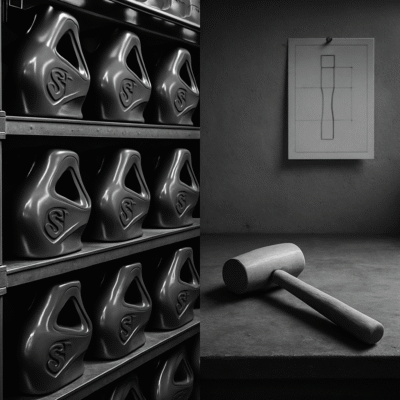
Most products today are made for recognition, not clarity. They are designed to be seen, bought, posted, and replaced. Fashion cycles, product lifespans, and seasonal upgrades aren’t flaws — they are features of the Recognition Loop.The result: more waste, less value, and a world flooded with things that fade.

Eidoism invites a different path:
Make fewer things — but give them form. Form is not aesthetic. It is necessity made visible. A product has form when it serves a real need, works as it should, and does not perform for attention

It is a long established fact that a reader will be distracted by the readable content of a page when looking at its layout.

Manufacturer

Media

Media

In the Age of Recognition

Journalism was once about clarity, truth, and form. Today, much of it is shaped by speed, visibility, and performance. Clicks have replaced facts. Outrage has replaced depth. Recognition — not reality — drives the headline.

Eidoism invites a different stance:
Not neutrality, not activism — but form. A journalism that isn’t written to perform, but to reveal. That resists the loop of attention and seeks what holds shape when the noise fades.

Beyond Performance

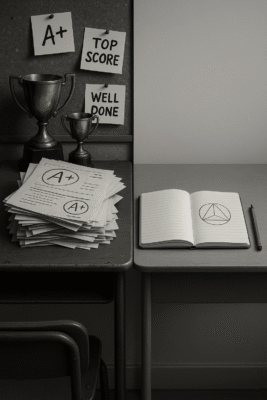
Education has become a system of performance:
Grades over understanding. Memorization over inquiry. Certificates over form.

Students learn to impress — not to see. Teachers teach for outcomes — not for structure. Everyone plays the game of recognition: test scores, rankings, achievements.

But the loop breaks the moment we ask:
What is education for?

Eidoism calls for education that does not train performers — but thinkers.
Not to chase validation, but to recognize form.
Not to accumulate facts, but to shape perception.

Education

Politics

Politics

Beyond Applause

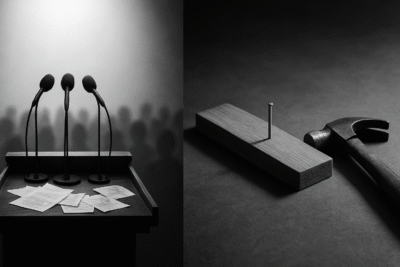
Politics has become a stage.
Leaders perform. Speeches are scripted for approval. Visibility matters more than structure.
But applause doesn’t build systems.
Recognition doesn’t repair what’s broken.

Eidoism offers a shift:
Politics should still perform — but not to be admired. It should perform in the original sense of the word:
To carry out. To deliver. To hold form.

Form Lab

Where forms break and new ones emerge.
We explore how recognition shapes — and limits — life. Through experiments and provocations, we reveal hidden patterns and create new ways of seeing and being.

Discover More

Build a better World

Manifesto

Not by force.
Not by fame.
By leaving the loop behind — and building only what is true.

A better world does not begin by rearranging systems — it begins by changing what we seek. As long as our lives are shaped by the hunger for recognition, every system will collapse into the same cycles: competition, overproduction, conflict, decay. But when we act from clarity instead of craving, form instead of performance, the shape of life itself changes.

The world won’t change through noise.
It will change through form.

Eidoism Thoughts

The Core of Intelligence

When vision and hearing are absent, intelligence does not disappear—symbols do. DeafBlind cognition reveals how meaning and thought arise before language.

Learning begins with prediction failure. When expected states do not occur, Prediction Feedback (PF) gates learning by shifting the system from exploitation to exploration. What stabilizes are not symbols, but predictive constraints—invariants that reliably reduce uncertainty across interaction. These constraints form functional ontologies: commitments about how the world behaves under action.

Thought is not inner speech. It is the serial traversal of stabilized ontological constraints, enabling internal simulation, comparison, and planning. In DeafBlind cognition, this traversal is tactile–motor; in hearing cognition, language may annotate it. Language does not generate thought.

Language is a structured, shared symbolic system that binds and transmits already-formed ontologies across individuals and generations. It enables society and collective intelligence, but it is not the biological source of meaning.

This ordering—prediction before symbol, ontology before language—has direct implications for AI. Biologically aligned intelligence must begin with embodied prediction and PF-gated ontology formation; language, if added, should function as an interface, not as a substrate.

Why We Are What We Are

Why do we become the particular persons we are, rather than any of the countless alternatives we might have been? This question precedes morality, psychology, and law. It is asked whenever we judge, diagnose, forgive, or punish. Yet most answers assume that identity is chosen, inherited as character, or consciously learned. This essay argues otherwise. Human identity emerges before intention, self-reflection, or moral reasoning exist. During early development, the brain passively accumulates associations and stabilizes them through Prediction Feedback (PF), a pre-conscious signal of predictive coherence. The resulting noetic horizon silently defines what feels natural, possible, and “like oneself.” Within this framework, crime and so-called perversions are not moral failures or genetic defects but intelligible outcomes of how identity stabilizes under unbalanced PF conditions. We are not the authors of who we are; we are the outcome of what once made our inner world coherent.
Inherited Emotional Patterns

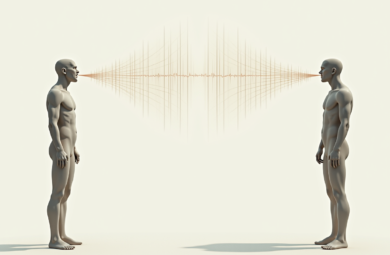
Emotions are not chemical reactions, neural firings, or conscious feelings. They are inherited semantic patterns that evolved to be expressed and recognized. Each basic emotion is instantiated through two distinct but coupled systems: an expression pattern that organizes the body into a meaningful social signal, and a recognition pattern that detects these signals in others and in oneself through visual, auditory, and interoceptive channels. Emotional feeling does not generate emotion; it emerges later as the perceptual recognition of the body’s own expressed state. By separating expression from recognition and locating emotion in embodied semantic patterns rather than in transmitters or brain regions, this framework explains emotional universality, infant emotional competence, cross-cultural recognition, and the persistent confusion between bodily signals and felt experience.

An Open Letter to Mathias Döpfner

This open letter challenges Mathias Döpfner’s concept of “Performance Patriotism” by arguing that performance, growth, and wealth are not foundations of societal strength but secondary signals that emerge from deeper structural coherence. Drawing on the framework of Eidoism, the text critiques Europe’s fixation on competitiveness and acceleration, warning that systems optimized for constant performance become fragile, dependent on external validation, and prone to instability. Instead of faster growth or louder demonstrations of power, the letter proposes a form-based perspective in which sovereignty, resilience, and cultural confidence arise from internal alignment, structural balance, and the ability to function sustainably without permanent pressure to outperform others.

How Nations Form a Shared Sense of Reality

Nations are not held together by shared beliefs or unanimous agreement. They remain stable because citizens develop a shared sense of reality—a common set of expectations about what is real, what consequences will follow actions, and which futures are plausible. This sense of reality operates below ideology and opinion and is reinforced through institutions, rituals, and social consequences. The public return of North Korean soldiers from foreign deployment illustrates how societies actively repair and stabilize these shared expectations, absorbing potentially disruptive experiences into a coherent national order rather than allowing them to fracture it.

The Developmental Origin of Good and Bad in Human Personality

Human personality does not originate in moral choice or conscious reasoning. Long before the brain can think symbolically, it evaluates. From birth, inherited neural comparators continuously distinguish comfort from discomfort, safety from threat, and coherence from instability. These evaluations regulate early prediction patterns through Predictive Feedback (PF), while emotions function as broadcast signals of the brain’s internal regulatory state—coordinating action internally and communicating condition externally.

During early childhood, repeated emotional and social interactions calibrate these comparators and stabilize specific predictive pathways. This process shapes the developing prefrontal cortex and biases how the individual later restores internal balance. What societies eventually label as “good” or “bad” personality traits are not moral properties encoded in the brain, but observable outcomes of this early regulatory development. Understanding personality in this way shifts the question from judgment to development, and from ethics to neurobiological regulation.

Look deeper into the Eidoism Thoughts and find more infomation to get the way out.

Also, watch the  Exhibition of Hypocrisy

Scientific Foundations:

Research Behind Recognition and Eidoism

At this time, only a few scientific papers explicitly study recognition as a core driver of human behavior. The concept of Eidoism is new and not yet established in academic language. However, we will collect and present all existing research related to recognition loops, reward mechanisms, behavioral reinforcement, and systemic collapse — building a scientific foundation that supports the principles of Eidoism. This section will grow as awareness and research evolve.

Exhibition of Hypocrisy

“Do-Gooder”Activism: The Branded Conscience

Do-gooder activism is not about change—it’s about being seen as good.
The “Gutmensch” performs morality like a brand, trading justice for applause.
In a world ruled by recognition, even empathy becomes a costume.
Eidoism doesn’t reject goodness—it reveals when goodness is part of the loop.

Glued in the Loop: Climate Protest as Performance

Climate protests that glue bodies to asphalt seek to disrupt—but often perform.
What appears radical is quickly absorbed by the recognition loop: shared, judged, forgotten.
Without structural change or personal coherence, even resistance becomes spectacle.
The glue dries. The system stays.

Private Spaceflights and the Loop of Recognition

The Blue Origin NS-31 mission, featuring an all-female celebrity crew on a 10-minute suborbital flight, is celebrated as a symbol of progress. But from the lens of Eidoism, it reveals the hollow form of modern recognition culture — prioritizing symbolic ascent over structural need. This essay critiques the ethical, ecological, and philosophical implications of privatized space tourism, questioning the legitimacy of pleasure and spectacle when divorced from responsibility, justice, and planetary limits.

see the unseen: how everyday performance masks internal emptiness—and how recognition drives even the purest intentions

Stay Informed — Quietly

Occasional reflections, new research, and form-based projects.
Only when there’s something worth sharing.

  • We only store your email address — nothing else.

  • You are free to use an anonymous email.

  • No tracking, no profiling, no hidden data collection.

This site uses no cookies. No tracking. No analytics. No optimization. Nothing watches you here.

There is no address., no phone
Eidoism is not a place, not a company, and not an institution.
 A structure of perception meant to be recognized, not located.

Made With Love       qix.ink © 2026. All Rights Reserved.

to top
en_US