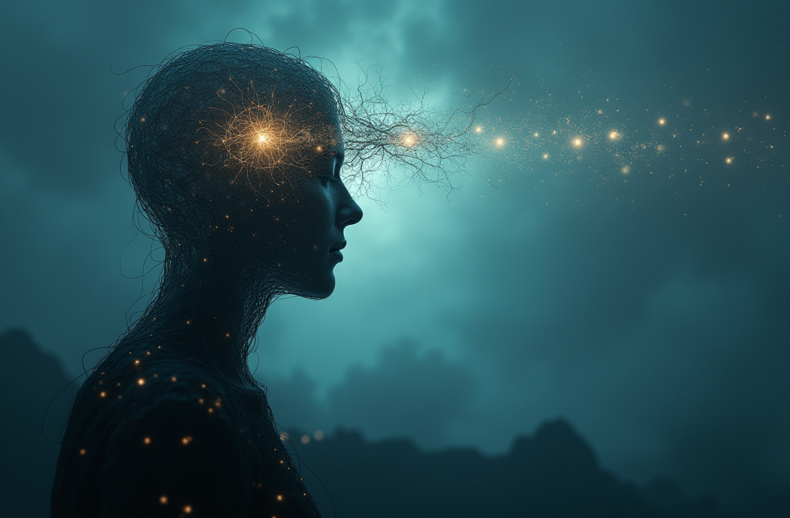
Why do we become the particular persons we are, rather than any of the countless alternatives we might have been? This question precedes morality, psychology, and law. It is asked whenever we judge, diagnose, forgive, or punish. Yet most answers assume that identity is chosen, inherited as character, or consciously learned. This essay argues otherwise. Human identity emerges before intention, self-reflection, or moral reasoning exist. During early development, the brain passively accumulates associations and stabilizes them through Prediction Feedback (PF), a pre-conscious signal of predictive coherence. The resulting noetic horizon silently defines what feels natural, possible, and “like oneself.” Within this framework, crime and so-called perversions are not moral failures or genetic defects but intelligible outcomes of how identity stabilizes under unbalanced PF conditions. We are not the authors of who we are; we are the outcome of what once made our inner world coherent.
Lesen Sie weiter

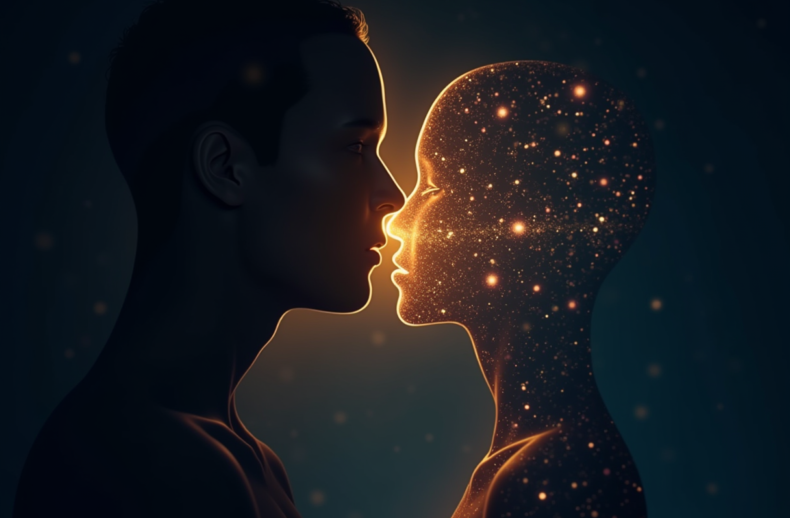
Love is not an emotion in the classical or neuroscientific sense, nor is it a hormone-driven state or a learned social script. Within a Predictive Feedback (PF)–based model of cognition, love emerges as a resonance phenomenon: a self-stabilizing loop between sustained positive PF and its rendering in perceptual awareness. Emotions, in this framework, are blind, non-directed broadcasts of the organism’s current mental state, implemented through inherited physiological patterns and recognized by equally inherited perceptual comparators. Feelings arise only when awareness interprets these broadcasts using learned entities and contextual associations. Love, therefore, is neither broadcast nor comparator output, but a persistent PF-positive resonance that awareness repeatedly reifies as a coherent feeling. When prediction confirmation collapses, love dissolves—not because an emotion has ended, but because the PF resonance that sustained the feeling has broken.

Lesen Sie weiter

nach oben
de_DE