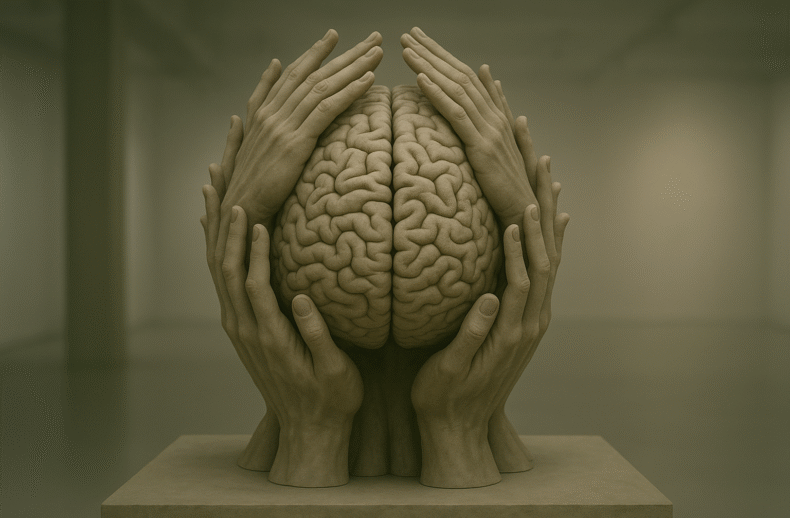
Why do we become the particular persons we are, rather than any of the countless alternatives we might have been? This question precedes morality, psychology, and law. It is asked whenever we judge, diagnose, forgive, or punish. Yet most answers assume that identity is chosen, inherited as character, or consciously learned. This essay argues otherwise. Human identity emerges before intention, self-reflection, or moral reasoning exist. During early development, the brain passively accumulates associations and stabilizes them through Prediction Feedback (PF), a pre-conscious signal of predictive coherence. The resulting noetic horizon silently defines what feels natural, possible, and “like oneself.” Within this framework, crime and so-called perversions are not moral failures or genetic defects but intelligible outcomes of how identity stabilizes under unbalanced PF conditions. We are not the authors of who we are; we are the outcome of what once made our inner world coherent.
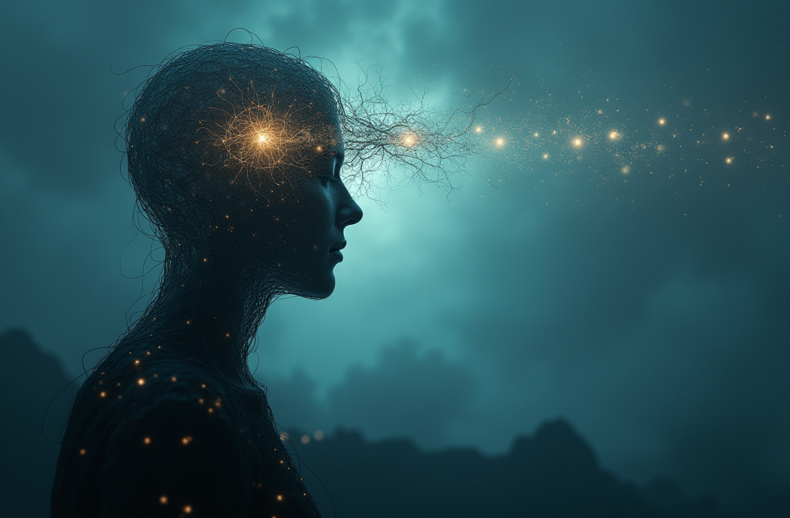
Modern society is addicted to recognition—from social media validation to consumer status games—creating a cycle of anxiety, ego inflation, and performance pressure. But deep in the forests of Borneo and the Amazon, Indigenous tribes live with remarkable emotional stability and coherence, untouched by the loop of endless visibility. This essay explores how these cultures contain the brain’s demand for recognition inside stable social forms—and how Eidoism draws on their example to propose a return to meaning, function, and structural sufficiency in a post-performance world.
Das Gehirn sucht nicht nach Wahrheit, sondern nach Bequemlichkeit. Unter jeder Gewohnheit, jedem Glauben und jeder Identität liegt ein verstecktes Vergleichssystem: eine neuronale Schleife, die prüft, ob man sich "gut" fühlt, und Veränderungen unterdrückt, wenn dies der Fall ist. Der Eidoismus deckt diese Schleife auf - nicht um sie durch eine andere Ideologie zu ersetzen, sondern um die gesamte Struktur zu verlassen. Dies ist kein Aufruf zur Revolution, sondern zur Offenbarung. Veränderung beginnt nicht in der Gesellschaft - sie beginnt im Nervensystem.