This open letter challenges Mathias Döpfner’s concept of “Performance Patriotism” by arguing that performance, growth, and wealth are not foundations of societal strength but secondary signals that emerge from deeper structural coherence. Drawing on the framework of Eidoism, the text critiques Europe’s fixation on competitiveness and acceleration, warning that systems optimized for constant performance become fragile, dependent on external validation, and prone to instability. Instead of faster growth or louder demonstrations of power, the letter proposes a form-based perspective in which sovereignty, resilience, and cultural confidence arise from internal alignment, structural balance, and the ability to function sustainably without permanent pressure to outperform others.

China’s ambition to create a new world order is less about ideology than about recognition. From the dynasties of the past to the People’s Republic today, China has sought to transform power into dignity — never again to suffer humiliation. Its military modernization, global trade dominance, and Belt and Road infrastructure are not mere strategies; they are materialized forms of face. Yet this reflex meets America’s own Demand for Recognition, creating a trap where each move for respect is read as an insult by the other. History shows that China fights limited wars for symbolic status, not open conquest. But external triggers — a Taiwanese declaration of independence or a sudden U.S. technological leap — could tip both powers into direct confrontation. The struggle is not only about territory but about dignity itself, and unless recognition is consciously redefined, the world risks drifting into conflict by reflex.
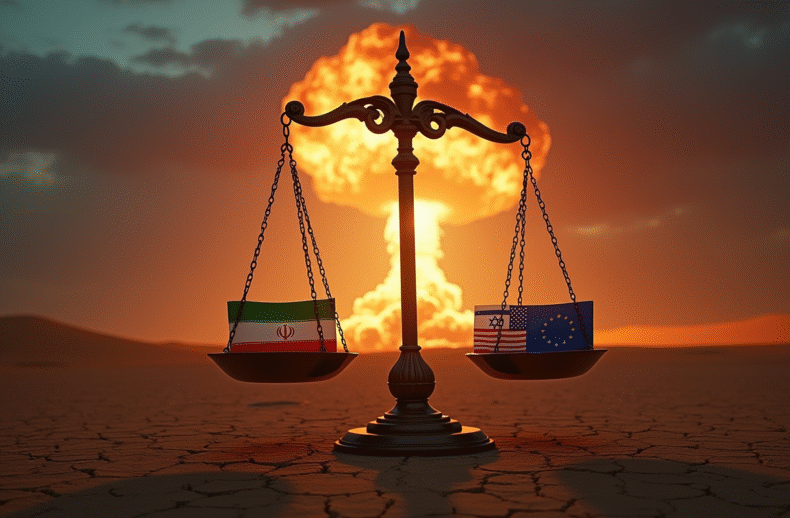
The Iranian nuclear conflict cannot be understood solely through the lens of technology and security. Enrichment levels and missile ranges matter, but they are not the real drivers of escalation. At its core, Iran’s pursuit of the bomb is about the Demand for Recognition (DfR) — the need to be acknowledged as sovereign, equal, and immune to humiliation. Each sanction, each Israeli or U.S. strike, has deepened Iran’s resolve rather than weakened it. The atomic bomb represents not just deterrence, but dignity: a symbolic victory in a struggle for respect on the world stage. If Iran crosses the nuclear threshold, the West must abandon denial and coercion. Only through recognition-based diplomacy can confrontation be transformed into stability.