Why do we become the particular persons we are, rather than any of the countless alternatives we might have been? This question precedes morality, psychology, and law. It is asked whenever we judge, diagnose, forgive, or punish. Yet most answers assume that identity is chosen, inherited as character, or consciously learned. This essay argues otherwise. Human identity emerges before intention, self-reflection, or moral reasoning exist. During early development, the brain passively accumulates associations and stabilizes them through Prediction Feedback (PF), a pre-conscious signal of predictive coherence. The resulting noetic horizon silently defines what feels natural, possible, and “like oneself.” Within this framework, crime and so-called perversions are not moral failures or genetic defects but intelligible outcomes of how identity stabilizes under unbalanced PF conditions. We are not the authors of who we are; we are the outcome of what once made our inner world coherent.
Tiếp tục đọc

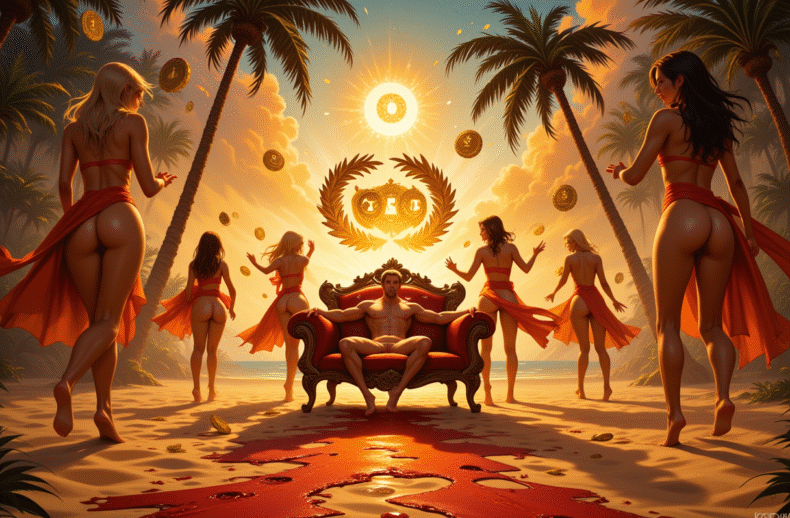
Humanity calls itself civilized, yet the same ancient instincts still shape its behavior. From kings with harems to billionaires with hidden mistresses, the link between power and sexual privilege remains unchanged. Education and democracy have not dissolved this biological pattern — they have only concealed it beneath the language of morality and progress. The Demand for Recognition (DfR), once expressed in crowns and concubines, now appears as fame, wealth, and influence. Morality and culture function as stabilizing filters within evolution, not as escapes from it. Civilization, therefore, is not the victory over instinct but evolution becoming aware of itself. The question is no longer whether humans can control their animal nature, but whether they can redirect recognition toward empathy, balance, and sustainability — transforming dominance into consciousness.

Tiếp tục đọc

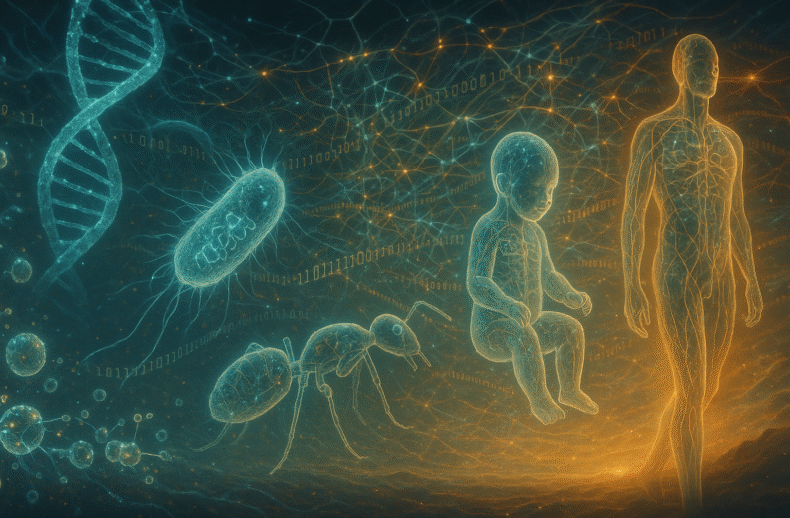
Human beings are not a special exception in nature, but advanced replication systems following the same logic as bacteria, ants, or viruses. At every level—molecules, DNA, brains, societies—life is simply the persistence and replication of stable information structures. What we call culture and social complexity are not higher evolutionary achievements, but side effects of our neural plasticity and the demand for recognition. The uniqueness of humanity is an illusion born from recursive status-seeking, not a fundamental difference in design.

Tiếp tục đọc

lên đầu trang
vi